
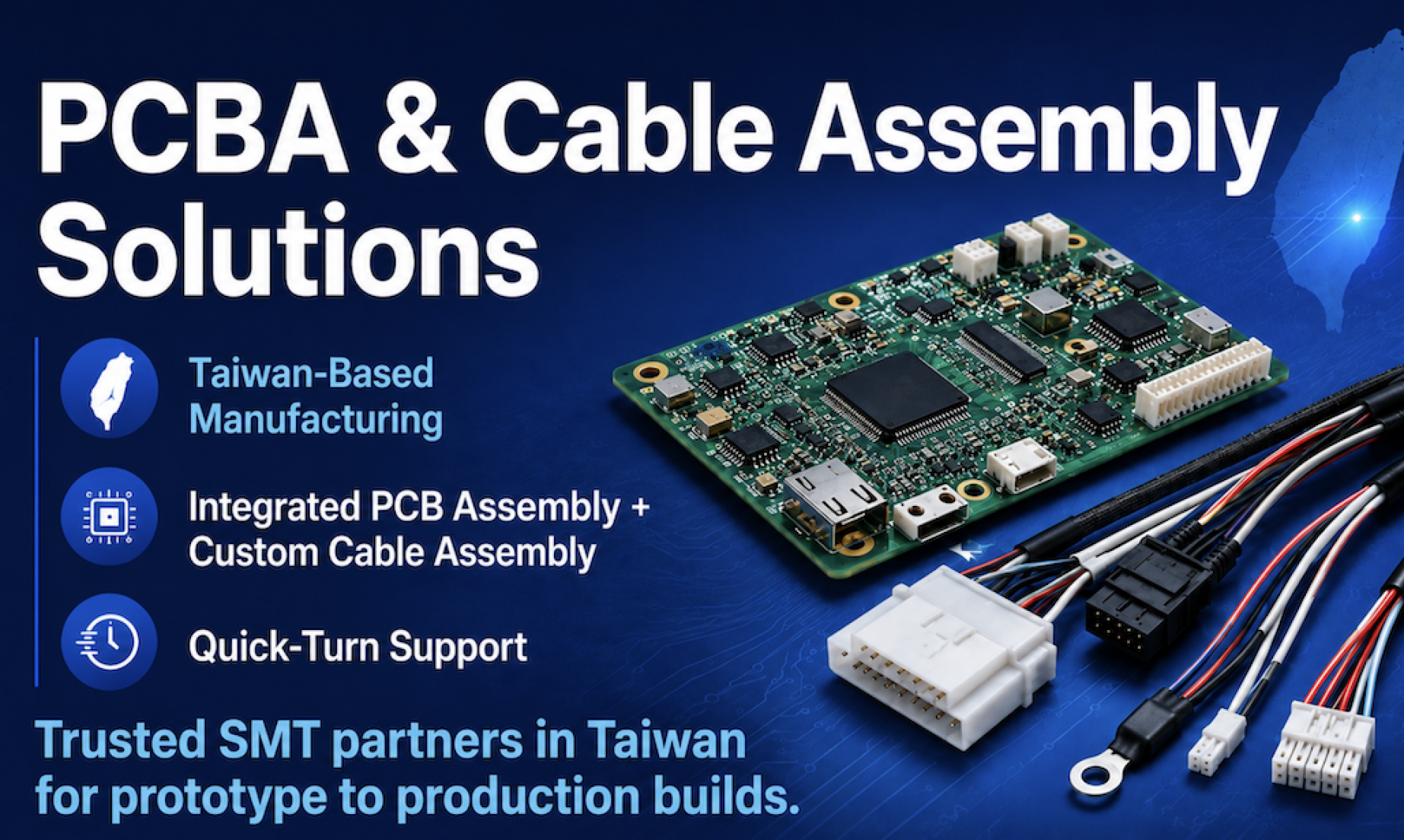
What Are Wire and Cable Assemblies?
Wire and cable assemblies are essential components used to transmit power, signals, and data between electronic devices, equipment, and systems. They are widely used across industries such as automotive, medical, industrial automation, telecommunications, and consumer electronics.
While the terms are sometimes used interchangeably, wire assemblies and cable assemblies serve different purposes and are constructed differently depending on application requirements.
What Is a Wire Assembly?
A wire assembly typically consists of one or more individual wires that are cut to length, stripped, and terminated with connectors, terminals, or contacts. Wire assemblies are often used for internal connections where flexibility, routing simplicity, or space constraints are critical.
Common characteristics of wire assemblies include:
-
Single or multiple insulated conductors
-
Simple termination at one or both ends
-
Lightweight and flexible design
-
Used for low- to medium-complexity electrical connections
What Is a Cable Assembly?
A cable assembly is made up of multiple conductors bundled together within a single outer jacket. This structure provides additional protection, durability, and organization compared to individual wires.
Cable assemblies are commonly used in environments that require:
-
Protection from abrasion, moisture, or interference
-
Higher mechanical strength
-
Signal integrity over longer distances
-
Organized routing of multiple conductors
Many industrial systems rely on properly manufactured cable assemblies to ensure performance and durability.
Wire Assembly vs. Cable Assembly
Understanding the difference between wire assemblies and cable assemblies helps ensure the right solution is selected for each application.
Structure:
Wire Assembly: Individual wires
Cable Assembly: Multiple conductors in one jacket
Protection:
Wire Assembly: Minimal
Cable Assembly: Enhanced insulation & shielding
Flexibility:
Wire Assembly: High
Cable Assembly: Moderate to high
Typical Use:
Wire Assembly: Internal connections
Cable Assembly: External or harsh environments
Common Types of Wire and Cable Assemblies
Wire and cable assemblies can be customized for a wide range of electrical and mechanical requirements, including:
-
Power cable assemblies
-
Signal and data cable assemblies
-
Coaxial cable assemblies
-
USB, HDMI, and communication cables
-
Overmolded cable assemblies
-
High-flex and robotic cable assemblies
Each type is designed to meet specific performance, durability, and compliance needs.
Applications of Wire and Cable Assemblies
Wire and cable assemblies are used in numerous industries and applications, such as:
-
Automotive: Sensors, control units, power distribution
-
Medical: Diagnostic equipment, patient monitoring devices
-
Industrial: Automation systems, robotics, machinery
-
Telecommunications: Data transmission, networking equipment
-
Consumer Electronics: Computers, appliances, smart devices
Customization ensures assemblies meet electrical, environmental, and regulatory requirements for each industry.
Custom Wire and Cable Assembly Solutions
Many applications require custom wire and cable assembly solutions tailored to specific designs, operating conditions, and performance standards. Customization may include:
-
Connector and terminal selection
-
Wire gauge and insulation material
-
Shielding and jacketing options
-
Length, routing, and labeling requirements
-
Compliance with industry standards and certifications
Custom assemblies help improve reliability, simplify installation, and reduce overall system complexity.
How Wire and Cable Assemblies Are Manufactured
The manufacturing process for wire and cable assemblies typically involves several key steps:
-
Design review and BOM verification
-
Cutting and stripping of wires or cables
-
Crimping, soldering, or termination
-
Bundling, sleeving, or overmolding
-
Electrical and continuity testing
-
Final inspection and packaging
Quality control throughout the process ensures performance consistency and long-term reliability.
Choosing the Right Cable Assembly Partner
Selecting the right cable assembly manufacturer is essential for achieving reliable performance and consistent quality. Key factors to consider include manufacturing experience, quality systems, customization capabilities, and the ability to support both low- and high-volume production.
YC Cable provides wire and cable assembly solutions based on customer-provided designs and bills of materials, supporting OEM and industrial applications with precision manufacturing and strict quality control.
Contact us for a quick quote.