
Custom Wire Harnesses
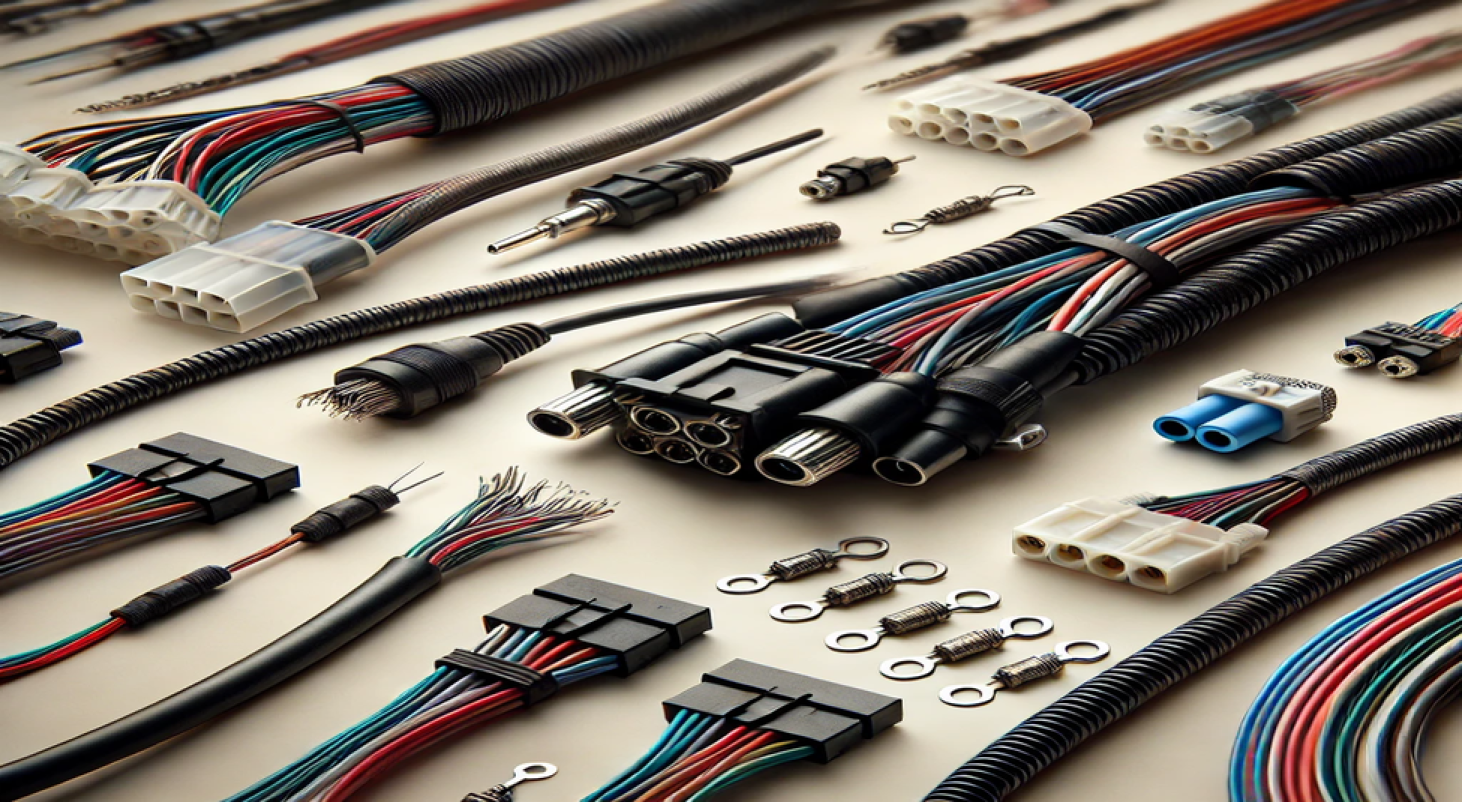
Custom wire harnesses are manufactured to customer drawings, supporting flexible layout, labeling, and multi-connector configurations across various applications.
No Wiring Harness for Personal Cars
What is Custom Wire Harnesses?
Custom wire harnesses are essential components in a wide range of industries, from aerospace and medical to telecommunications and manufacturing. They offer numerous benefits over traditional wiring methods, including improved organization, increased reliability, and reduced installation time.
Custom wire harnesses and cable assemblies are Y.C.’s specialty. Custom wire harnesses are designed and produced based on the specific needs and requirements of a particular application. They are customized to match the exact specifications of the equipment and can include various types of wires, connectors, terminals, and protective sheaths
Opting for custom wire harnesses offers many advantages over off-the-shelf wire harnesses, including enhanced reliability, durability, performance, and customization. It can also aid in reducing costs and simplifying the installation process.
At Y.C. Cable, we can deliver any custom wire harnesses using custom-made, multi-core cords that give the client the exact number type, and size of the cores to fit their requirements.
Since 1985, Y.C. Cable has been a professional custom wiring harnesses manufacturer and has established a good relationship with world-renowned vehicle manufacturers. We produce different customized automotive wiring harnesses and automotive cable assemblies for all types of vehicles. Thanks to our many years of production experience, our engineering team can provide solutions to any problems you may encounter.
Our wire harnesses have been utilized in various applications, even in demanding environments. With over three decades of experience in cable and wire harness manufacturing, Y.C. Cable provides a broad range of custom wiring harnesses for multiple industries such as automotive, medical, energy, networking and communications, and industrial.
What is Custom Wire Harnesses Processing?
It’s a method of assembling cables or electronic wires; using straps, wire harnesses, sleeves, coils, or other processing methods to assemble them together, and then combining the required parts and connectors to achieve transmission. The effect function of signal or power can also be called wire harness processing, wire processing, or wire assembly!
Types of Custom Wiring Harnesses
There are several types of custom wire harnesses available in the market, and each type serves a specific purpose. Some of the most common types include:
Automotive Wire Harnesses
Automotive wire harnesses are used in vehicles to connect different electrical components, including lights, sensors, and the engine control unit. These harnesses are designed to withstand extreme temperatures and vibrations, making them reliable and durable.
Aerospace Wire Harnesses
Aerospace wire harnesses are used in aircraft to connect different electrical systems, including navigation, communication, and control systems. These harnesses are designed to meet strict safety standards and withstand harsh environmental conditions.
Medical Wire Harnesses
Medical wire harnesses are used in medical devices to connect different electronic components, including sensors, monitors, and controllers. These harnesses are designed to meet strict safety and regulatory requirements and ensure the accuracy and reliability of medical equipment.
Industrial Wire Harnesses
Industrial wire harnesses are used in a wide range of industrial machinery, including manufacturing equipment, robotics, and automation systems. These harnesses are designed to withstand harsh industrial environments and ensure the reliable and efficient operation of machinery.
Flat Ribbon Harnesses
Flat ribbon harnesses are used in applications where a large number of wires need to be connected in a small space. They are made of flat, parallel wires that are held together by a ribbon or tape.
Coaxial Harnesses
Coaxial harnesses are used in applications where high-frequency signals need to be transmitted with minimal interference. They consist of a central conductor surrounded by an insulating layer and an outer shield.
Round Cable Harnesses
Round cable harnesses are used in applications where flexibility and durability are important. They consist of round cables that are bundled together with connectors and terminals.
Multi-Conductor Harnesses
Multi-conductor harnesses are used in applications where multiple wires need to be connected to different devices or components. They consist of multiple wires that are bundled together with connectors and terminals.
Hybrid Harnesses
Hybrid harnesses are used in applications where different types of wires need to be connected, such as power, data, and control signals. They consist of a combination of wires, connectors, and terminals that are designed for specific requirements.
High-Temperature Harnesses
High-temperature harnesses are used in applications where the wires are exposed to high temperatures, such as in engine compartments or industrial ovens. They are made of materials that can withstand high temperatures and are designed for durability and reliability.
Waterproof Harnesses
Waterproof harnesses are used in applications where the wires are exposed to moisture or water, such as in marine or outdoor environments. They are designed with specialized features such as waterproof connectors and protective sheaths.
Customized Harnesses
Customized harnesses are designed and manufactured to meet specific requirements of an application. They can include a combination of wires, connectors, terminals, and protective sheaths that are tailored to fit the exact specifications of the equipment.
The Advantage of Custom Wire Harnesses:
Custom wiring harnesses offer many benefits over off-the-shelf wire harnesses, including:
Saves Time and Money
Custom wire harnesses are designed to fit the exact requirements of an application, which reduces the installation time and eliminates the need for additional components or modifications. This can save time and money in the long run.
Ensures Safety and Reliability
Custom wire harnesses are designed and manufactured to meet specific safety and reliability standards. This ensures that the wires and components are properly insulated, shielded, and protected from damage and wear.
Improves Efficiency and Performance
Custom wire harnesses are designed to provide a clean and organized way to connect various components, which reduces the risk of errors and improves the overall efficiency and performance of the equipment.
Offers Customization and Flexibility
Custom wire harnesses can be designed and manufactured to meet specific requirements of an application, which allows for customization and flexibility. This means that the wires, connectors, terminals, and protective sheaths can be tailored to fit the exact specifications of the equipment.
Reduces Maintenance and Repair Costs
Custom wire harnesses are designed to be durable and reliable, which reduces the need for maintenance and repair. This can save money and increase the lifespan of the equipment.
Delivering Certified Quality in Custom Wire Harness Manufacturing
Y.C. Cable is a well-known wire harness manufacturer with excellent certifications and memberships. We take pleasure in adhering to stringent standards, guaranteeing that all of our goods satisfy the highest quality and safety standards. UL (Underwriters Laboratories) and ISO (International Organization for Standardization) certifications demonstrate our dedication to consistent, higher quality and safety standards. These certifications reassure customers that Y.C. Cable's products are dependable, safe, and of the highest quality.
Furthermore, Y.C. Cable's China factory is ISO 14001:2004 accredited. This specific accreditation demonstrates the company's dedication to environmental management, guaranteeing that its procedures have the least possible environmental impact. Y.C. Cable is also a member of the Wiring Harness Manufacturers Association (WHMA) and the Building Industry Consulting Service International (BICSI). These affiliations demonstrate our commitment to establishing industry standards and best practices. Y.C. Cable manufactures and tests all items in strict accordance with industrial standards, confirming its status as a trustworthy and reliable wire harness maker.
Finally, Y.C. Cable's full commitment to quality, safety, and environmental management, together with our industry memberships, positions it as a top alternative for customers' looking for dependable and exceptional wire harness supplies.
Contact us for a quick quote.
B to B Only!!