

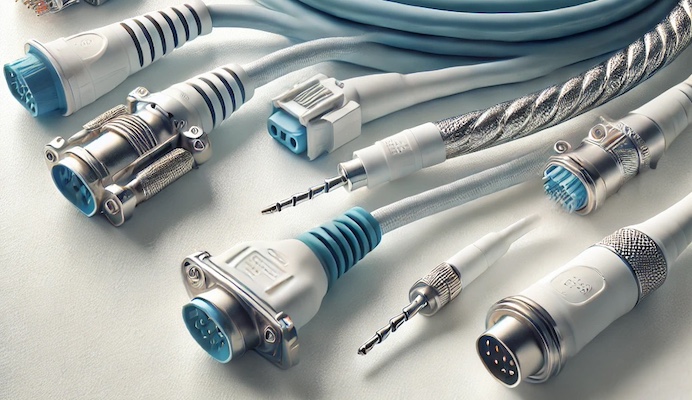
Applications: Sensors, Patient Monitoring, ECG/EEG & Diagnostic Equipment
Signal Requirements: Customer-Defined
Shielding & Grounding: Available by Design
Materials: Based on Device Requirements
Cleaning / Sterilization: Per Project Requirements
OEM Customization: Connectors, Length, Overmolding & Testing
Custom Biomedical Cable Assemblies
Y.C. Cable manufactures custom biomedical cable assemblies for sensors, patient monitoring systems, biosignal equipment, diagnostic devices, laboratory instruments, and other customer-defined healthcare equipment.
Assemblies are manufactured according to customer-approved drawings, BOMs, connector specifications, electrical requirements, materials, dimensions, and testing criteria.
Biomedical requirements can vary significantly by device, so material, patient-contact, cleaning, sterilization, regulatory, and testing requirements should be defined for each individual project.
Biomedical Cable Applications
Projects may support:
• Patient monitoring systems
• ECG-related equipment
• EEG-related equipment
• Biosignal sensors
• Diagnostic instruments
• Laboratory equipment
• Monitoring devices
• Sensor interfaces
• Portable medical electronics
• Customer-defined biomedical equipment
For the broader medical product family, visit Medical Cable Assemblies.
Biosignal & Sensor Connections
Biomedical signal applications may require attention to:
• Signal type
• Conductor configuration
• Shielding
• Grounding
• Connector type
• Cable flexibility
• Cable length
• Electrical interference
• Mechanical movement
• Customer-defined signal testing
Requirements should follow the actual device and signal interface.
Shielding & Signal Protection
Depending on the design, biomedical cable assemblies may include:
• Foil shielding
• Braided shielding
• Drain wires
• Grounding
• Shielded connectors
• Multi-conductor construction
• Coaxial construction
• Customer-defined EMI/RFI requirements
Shielding should be selected based on the product's electrical design.
Materials & Device-Specific Requirements
Projects may have requirements involving:
• Flexibility
• Cable jacket material
• Cleaning
• Chemical exposure
• Sterilization
• Patient contact
• Material restrictions
• Temperature
• Repeated movement
• Abrasion
Any biocompatibility, sterilization, FDA, regulatory, or patient-contact requirement should be explicitly defined for the individual finished device.
Connector & Mechanical Options
Assemblies may incorporate:
• Customer-specified connectors
• Circular connectors
• Board-to-wire connectors
• Sensor connectors
• Multi-pin connectors
• Overmolding
• Molded strain relief
• Protective sleeving
• Labels and identification
For molded cable designs, visit Overmolded Cable Assemblies.
Biomedical vs. General Medical Cable Assemblies
Choose Biomedical Cable Assemblies for projects focused on biosignals, sensors, patient monitoring, and related signal interfaces.
Choose Medical Cable Assemblies for broader medical, diagnostic, laboratory, imaging, and equipment cable requirements.
For multi-branch internal medical wiring, visit Medical Wire Harness Assemblies.
For system-level medical engineering considerations, visit Medical Cable & Wire Harness Solutions.
Prototype & Development Support
Projects may include:
• Engineering prototypes
• NPI builds
• First articles
• Electrical evaluation
• Fit evaluation
• Material review
• Design validation
• Repeat manufacturing
For development-stage builds, visit Quick-Turn Cable Assembly Prototyping.
For manufacturability and documentation support, visit Engineering Support.
What We Need to Quote
Please provide:
• Drawing
• BOM
• Connector information
• Signal or electrical requirements
• Cable specification
• Material requirements
• Patient-contact requirements when applicable
• Cleaning or sterilization requirements when applicable
• Cable length
• Quantity
• Testing requirements
• Current revision
• Target schedule
Frequently Asked Questions
What is a biomedical cable assembly?
A biomedical cable assembly provides a defined electrical or signal connection for biomedical sensors, monitoring equipment, diagnostic systems, or related healthcare devices.
Are all biomedical cables made with biocompatible materials?
No. Biocompatibility depends on the intended device and material-contact requirements and should be specified for the individual project.
Are all biomedical cables sterilization resistant?
No. Cleaning and sterilization requirements depend on the finished device and should be defined before material selection.
Can you manufacture ECG or EEG-related cable assemblies?
Projects for biosignal or monitoring equipment can be reviewed when the applicable electrical, connector, material, mechanical, and testing requirements are provided.
Request a Biomedical Cable Assembly Quote
Send us your drawing, BOM, device application, connector information, material requirements, quantities, and testing criteria.
Request a Biomedical Cable Quote