

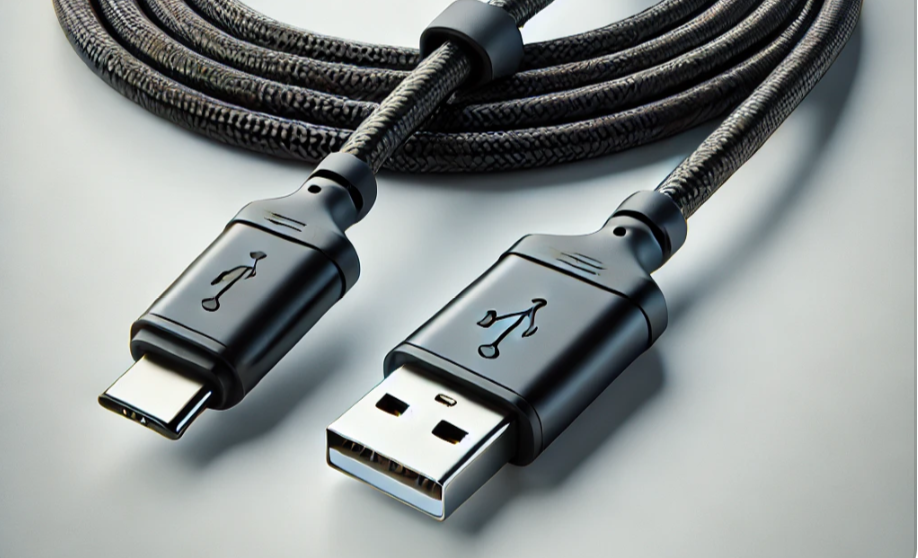
- Data Performance: Up to 480Mbps
- Current Capability: Up to 3A
- Connector: USB Type-C
- E-Marker: No
- Construction: PVC Molded
- OEM Customization: Length, color, molding, and testing options
USB 2.0 Type-C Cable 3A
Y.C. Cable offers a USB 2.0 Type-C cable configuration for applications requiring USB 2.0 data capability and up to 3A current.
The current product specification supports data transfer up to 480Mbps and uses a configuration without an E-marker.
This product can be reviewed for OEM applications requiring customer-defined cable length, connector configuration, molding, appearance, and testing requirements.
Current Product Specifications
The current configuration includes:
• USB Type-C connector
• USB 2.0 data capability up to 480Mbps
• Current capability up to 3A
• No E-marker in the current configuration
• PVC molded construction
• Reversible USB Type-C connector interface
Final requirements should follow the approved project documentation.
USB 2.0 Data Capability
This product uses USB 2.0 data capability of up to 480Mbps.
USB Type-C describes the connector interface and does not by itself define the supported data speed.
For applications requiring USB 10Gbps data performance, visit USB 10Gbps Type-C Cable.
3A Current Configuration
The current product configuration supports up to 3A current.
Project documentation should define:
• Required current
• Required power
• Cable length
• Conductor requirements
• USB requirements
• Connector configuration
• Electrical testing requirements
E-Marker Configuration
The current 3A product configuration does not use an E-marker.
E-marker requirements depend on the complete USB-C cable configuration and applicable USB requirements.
For the current USB 2.0 configuration that supports up to 5A and includes an E-marker, visit USB 2.0 Type-C Cable 5A.
OEM Customization Options
Depending on project requirements, this USB-C cable may be reviewed for customization involving:
• Cable length
• Cable color
• Cable jacket
• Connector shell
• PVC molding
• Strain relief
• Labels and identification
• Packaging
• Customer-defined testing
For broader USB-C design requirements, visit Custom USB-C Cable Assemblies.
When to Choose This Product
This configuration may be suitable when a project requires:
• USB Type-C connectivity
• USB 2.0 data capability
• Up to 3A current capability
• A non-E-marked cable configuration
• Customer-defined OEM cable dimensions or appearance
For applications requiring up to 5A, visit USB 2.0 Type-C Cable 5A.
For applications requiring USB 10Gbps data, visit USB 10Gbps Type-C Cable.
What We Need to Quote
Please provide:
• Connector configuration
• Cable length
• Required current
• Required data capability
• Quantity
• Cable or molding requirements
• Color requirements
• Testing criteria
• Drawing or BOM when available
• Target delivery date
Frequently Asked Questions
What data performance does this cable support?
The current product configuration supports USB 2.0 data up to 480Mbps.
What current does this USB-C cable support?
The current product configuration supports up to 3A.
Does this cable have an E-marker?
No. The current 3A product configuration does not use an E-marker.
Is USB Type-C automatically a high-speed data cable?
No. Type-C describes the connector. Data performance depends on the cable design and applicable USB specification.
Can this product be customized for OEM manufacturing?
Yes. Project-specific cable length, appearance, molding, mechanical, packaging, and testing requirements can be reviewed.
Request a USB 2.0 Type-C 3A Quote
Send us your connector configuration, cable length, quantity, current requirement, appearance requirements, and testing criteria.
Request a USB-C 3A Cable Quote