
What Are Cookies
As is common practice with almost all professional websites this site uses cookies, which are tiny files that are downloaded to your computer, to improve your experience. This page describes what information they gather, how we use it and why we sometimes need to store these cookies. We will also share how you can prevent these cookies from being stored however this may downgrade or 'break' certain elements of the sites functionality.
PRODUCTS
Custom Automotive Wire Harness Assemblies
Y.C. Cable manufactures custom automotive wire harness assemblies for OEM vehicle electronics, transportation equipment, agricultural machinery, and related automotive applications.
Wire harnesses are manufactured according to customer-approved drawings, bills of materials (BOM), wiring diagrams, pinouts, branch dimensions, connector requirements, wire specifications, and testing requirements.
Unlike a single cable assembly, an automotive wire harness can organize multiple wires, circuits, connectors, terminals, branches, labels, and protective materials into a defined routing configuration for installation within the vehicle or equipment.
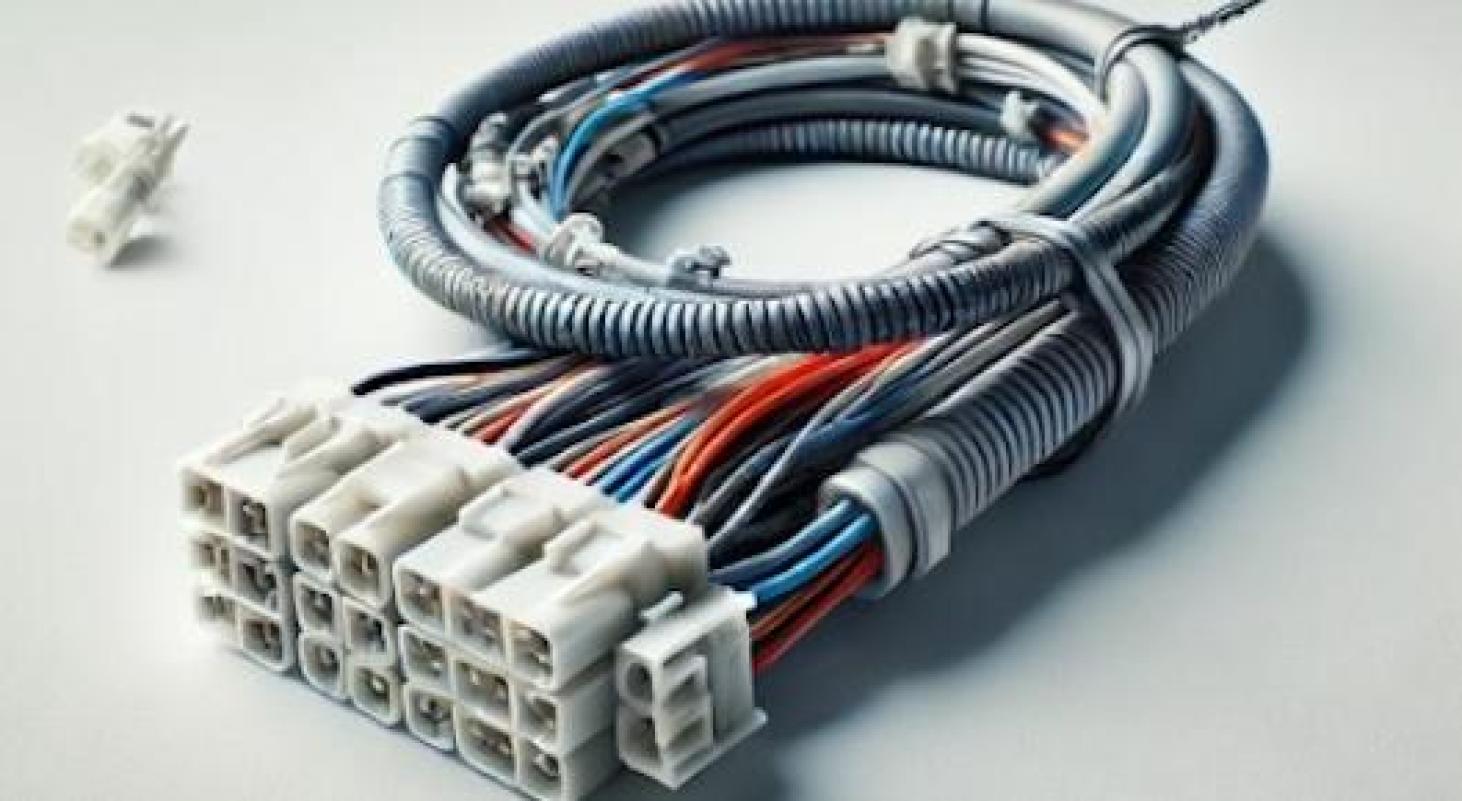
Automotive Wire Harness Configurations
Automotive wire harness projects may include:
• Point-to-point wiring
• Multi-branch wire harnesses
• Power distribution harnesses
• Signal and control harnesses
• Sensor harnesses
• Lighting harnesses
• Internal equipment wiring
• Camera and display connections
• Infotainment wiring
• Battery-related connections
• Agricultural machinery harnesses
• Commercial and industrial vehicle wiring
For individual cable connections rather than multi-branch harnesses, visit Automotive Cable Assemblies.
Branching, Routing & Vehicle Installation
Harness construction should reflect how the assembly will be routed and installed within the finished vehicle or equipment.
Important requirements may include:
• Main harness length
• Branch lengths
• Breakout locations
• Connector orientation
• Wire routing
• Bend radius
• Service loops
• Mounting locations
• Clips and fasteners
• Grommets and pass-through points
• Separation of power and signal wiring
• Installation sequence
• Service and replacement access
Accurate branch dimensions and routing information help reduce installation conflicts during prototype and production builds.
Connectors, Terminals & Components
Automotive wire harness assemblies may incorporate customer-approved:
• Connectors
• Crimp terminals
• Ring terminals
• Splices
• Junctions
• Boots
• Grommets
• Clips
• Fasteners
• Protective coverings
• Labels
• Wire markers
• Heat-shrink identification
Connector and terminal part numbers should be identified in the approved BOM whenever possible.
Wire Harness Protection
Protection should be selected around the installation and operating environment.
Depending on customer requirements, a harness may include:
• Braided sleeving
• Protective tubing
• Conduit
• Wire loom
• Harness tape
• Heat-shrink tubing
• Grommets
• Boots
• Strain relief
• Abrasion protection
• Branch protection
Requirements involving temperature, moisture, oil, chemicals, vibration, abrasion, or other environmental exposure should be identified during project review.
Power, Signal & Data Circuits
An automotive wire harness may contain different circuit types within the same assembly.
Power Circuits
Power wiring should be defined around voltage, current, conductor size, terminal requirements, routing, and environmental conditions.
Signal & Sensor Circuits
Signal and sensor wiring may require specific routing, shielding, grounding, connector, and electrical requirements.
Data & Communication Circuits
When data connections are included, cable type, interface, shielding, length, connector, and testing requirements should follow the customer-approved design.
Automotive Applications
Custom wire harness assemblies may support equipment and systems such as:
• Vehicle electronics
• Sensors
• Lighting
• Cameras
• Displays
• Infotainment equipment
• Control modules
• Power distribution
• Agricultural machinery
• Commercial vehicles
• Other OEM transportation equipment
For broader system-level requirements, visit Automotive Cable & Wire Harness Solutions.
Prototype to Production
Automotive wire harness projects may begin with:
• Engineering prototypes
• NPI builds
• First articles
• Fit and routing evaluation
• Electrical evaluation
• Low-volume production
• Repeat production
For development-stage builds, visit Quick-Turn Cable Assembly Prototyping.
For released harness designs with approved drawings, BOMs, and wiring documentation, visit Build-to-Print Cable Assembly Services.
Automotive Wire Harness Manufacturing
Depending on the approved harness design, manufacturing may include:
• Wire cutting
• Insulation stripping
• Crimping
• Terminal installation
• Soldering
• Splicing
• Connector assembly
• Branch routing
• Protective sleeving
• Heat-shrink application
• Harness taping
• Labeling and identification
• Electrical testing
• Visual and dimensional inspection
Learn more about our Cable Assembly Manufacturing Capabilities.
Inspection & Testing
Inspection and testing requirements should follow customer-approved product documentation.
Depending on the project, these may include:
• Wire and component verification
• Connector and terminal verification
• Pin-to-pin verification
• Electrical continuity testing
• Visual workmanship inspection
• Harness and branch dimension verification
• Pull-force testing when specified
• Insulation resistance or Hi-Pot testing when specified
• First-article inspection
• Customer-defined functional testing
What We Need to Quote
Please provide as much of the following information as possible:
• Harness drawing
• Bill of Materials
• Wiring diagram or pinout
• Connector and terminal part numbers
• Wire specifications
• Main harness and branch dimensions
• Labeling requirements
• Protective material requirements
• Vehicle or equipment application
• Operating environment
• Prototype or production quantity
• Estimated annual volume
• Testing requirements
• Current revision
• Target delivery date
Frequently Asked Questions
What is an automotive wire harness?
An automotive wire harness organizes multiple wires, connectors, terminals, branches, protective materials, labels, and mounting components into a defined electrical routing system.
Can Y.C. Cable manufacture automotive wire harnesses from our drawings and BOM?
Yes. Projects can be reviewed using customer drawings, BOMs, wiring diagrams, pinouts, branch dimensions, connector information, quantities, and testing requirements.
Can you manufacture multi-branch automotive wire harnesses?
Yes. Multi-branch configurations can be manufactured according to customer-approved routing, branch dimensions, connectors, terminals, and wiring documentation.
What is the difference between an automotive cable assembly and a wire harness?
An automotive cable assembly usually provides a defined connection between components. A wire harness typically combines multiple wires, circuits, connectors, and branches into a larger routed wiring system.
Visit Automotive Cable Assemblies for cable-focused products.
Can you support prototype automotive wire harnesses?
Prototype and first-article builds can support fit, routing, connector orientation, branch dimensions, labeling, and electrical evaluation before repeat production.
Request an Automotive Wire Harness Quote
Send us your harness drawing, BOM, wiring diagram, connector information, quantity, application requirements, and testing requirements.
Request an Automotive Wire Harness Quote